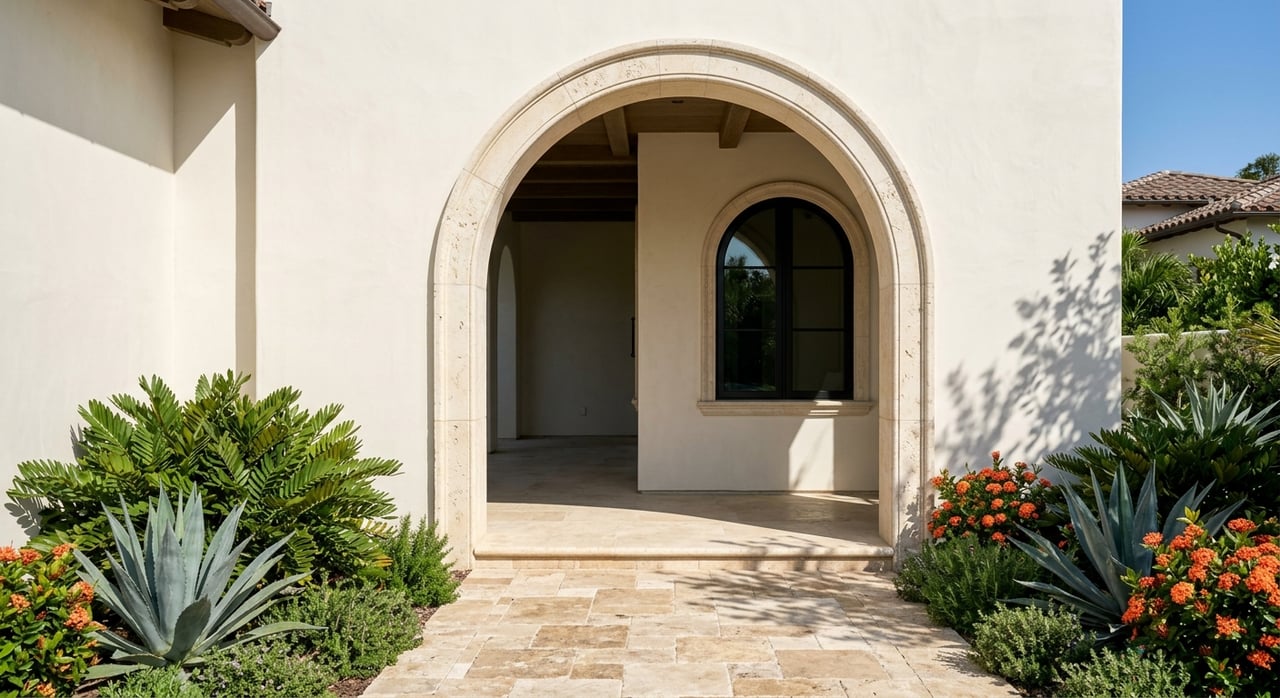
Frenchmans Creek vs Old Palm and Frenchmans Reserve
May 21, 2026
May 21, 2026
Choosing between Frenchman’s Creek, Old Palm, and Frenchman’s Reserve is not just about picking a home. It is about choosing the kind of daily life you want in Palm Beach Gardens. If you are comparing these three private club communities, you are likely weighing amenities, costs, home styles, and overall fit. This guide breaks down the key differences so you can narrow your options with more confidence. Let’s dive in.
All three communities are in Palm Beach Gardens, but they serve different priorities.
Frenchman’s Creek is the largest of the three, with just over 600 homes and a broad, resort-style amenity package. Old Palm is smaller, with fewer than 325 homes, and has a more boutique, golf-focused identity. Frenchman’s Reserve falls between them, with a wider mix of home types and a club setting that emphasizes family programming and flexibility.
If you are looking at them side by side, the simplest way to think about the difference is this: Frenchman’s Creek offers the fullest private-club ecosystem, Old Palm leans most heavily into golf, and Frenchman’s Reserve balances club living with a broader day-to-day amenity mix.
Membership structure is one of the biggest distinctions among these communities. In all three, residents are required to maintain some form of club membership.
Frenchman’s Creek states that club membership is mandatory for residents and that all 606 households fall into one membership category. Based on the latest public fee sheet in the research, the current published figures include a $300,000 membership equity payment, $48,572 in annual club dues, a $3,800 capital replenishment charge, and a $2,000 food-and-beverage minimum.
POA dues vary by property type. The published figures show annual POA charges ranging from about $22,057 to $30,237, with a separate $395 waterfront premium.
Old Palm requires owners of homesites or residences to acquire and maintain a Premier Membership. The club also caps total equity memberships at 330, which supports its smaller-scale feel.
The research report cites a publicly circulated 2024 fee sheet showing a $350,000 equity membership and $38,500 in annual club dues plus Florida sales tax. HOA fees vary by property type, with examples in listing data ranging from roughly $796 to $810 per month on some homes and about $1,667 to $2,237 per month on larger estate properties.
Frenchman’s Reserve requires residents to hold an equity membership, but it offers two resident categories: Full Golf Equity and Social/Sport Equity. That gives buyers more flexibility depending on how they plan to use the club.
According to the research report, a public fee sheet lists Full Equity at $225,000 with annual dues of $20,528, plus $1,100 in capital dues and a $650 debt service charge. Social/Sport Equity is listed at $115,000 with annual dues of $29,803, plus $1,800 in capital dues and a $650 debt service charge. The club also states there is no food-and-beverage minimum, though there is a $75 monthly food-and-beverage service charge.
Based on the published figures in the research, Frenchman’s Creek appears to carry the highest ongoing costs of the three. Old Palm sits in the middle, though HOA costs can still be significant depending on the home. Frenchman’s Reserve has a lower initiation point than Frenchman’s Creek, but annual dues and POA-related costs are still substantial.
That said, actual ownership costs depend on the home you choose, the membership category, and current club budgets. If cost is a major factor in your decision, it is important to verify current dues, assessments, and membership terms before you buy.
Amenities shape how a community feels once you live there. This is where the three clubs separate more clearly.
Frenchman’s Creek has the broadest amenity stack. The club reports 36 holes of golf, a bi-level driving range, a 124,450-square-foot clubhouse, 24/7 fitness, a luxury spa and salon, and 26 Har-Tru and stadium courts for tennis and related racquet play.
One of its standout features is the private beach club in Juno Beach. The club says members have access to a private Atlantic beach section, a heated pool, and a private restaurant there. For buyers who want both country club living and beach access, this is a defining advantage.
Old Palm is the clearest golf-first option. Its club materials describe a Raymond Floyd-designed 18-hole course, a 19th bye hole, a 33-acre Golf Studio and practice facility, private instruction, and a caddie program.
The club also describes play without tee-time constraints. If your ideal routine centers on golf and practice, Old Palm stands apart for that reason alone.
Frenchman’s Reserve offers a more balanced club environment. The club reports an Arnold Palmer Signature course, a 45,000-square-foot clubhouse, seven clay tennis courts, four pickleball courts, a multi-sport court, a resort-style pool, a spa and salon, a fitness center, a youth center, and guest suites.
The research also notes formal and casual dining, a 4.5-acre short-game facility, and family-oriented programming. If you want an equity club with strong non-golf amenities, Frenchman’s Reserve may feel more versatile.
Luxury living is not only about amenities. It is also about how easy and supported daily ownership feels.
Frenchman’s Creek leans toward concierge-style ownership support. Its real estate materials say the community and amenities operate under a single homeowner’s association, and residents can use services such as home repair, house watch, hurricane preparation, and mail services.
That level of support can appeal to buyers who want a more managed ownership experience, especially seasonal residents or those who travel often.
Old Palm’s public listing data describe a gated community with manned gates, security patrol, and on-site property management. The research also notes that community infrastructure responsibilities are split between HOA-related operations and the community development district, including drainage, roadway improvements, and perimeter wall and buffer improvements.
For buyers, that means Old Palm has a layered maintenance and security structure rather than a single all-in service model.
Frenchman’s Reserve is the most explicit in the research about security and included services. Its membership FAQ says POA charges include home security alarm monitoring with a comprehensive service plan, cable television with high-speed internet, landscape maintenance for most homes, 24-hour security, and an on-site POA team.
The club also describes gated 24/7 access control, roving and tactical patrols, video surveillance, and protection of the community’s five-mile perimeter. If day-to-day convenience and structured security are high priorities, this is worth noting.
Your lifestyle fit also depends on what kind of home you want and how much maintenance you are comfortable with.
Frenchman’s Creek has the broadest housing mix of the three. The club says the community includes townhomes, custom estates, and waterfront properties, while current listings show homes from the mid-3,000-square-foot range to more than 10,000 square feet.
The research also points to a mix of renovated homes, new construction, and estate-scale residences. That variety may appeal to buyers who want more architectural and price-point range within one club setting.
Old Palm is the most segmented by neighborhood and product type. Its real estate materials divide the community into Golf Estates, Isle Estates, Grand Estates, and Custom Estates.
The reported size ranges run from about 4,000 to more than 15,000 square feet, depending on neighborhood. The club describes styles that include British West Indies and Bermuda-inspired architecture with Caribbean influence, while recent listings also show Mediterranean-style homes.
Frenchman’s Reserve offers a simpler but still varied mix. The club reports 341 single-family homes, 56 coach homes, and 50 custom homes ranging from 2,450 to 11,000 square feet.
The research notes a strong Mediterranean presence, some contemporary-renovated homes, and maintenance-free coach homes. That can make Frenchman’s Reserve attractive if you want club living with lower exterior upkeep options.
Each of these communities can be the right choice, but for different reasons.
If you want the most complete private-club lifestyle and are comfortable with higher recurring costs, Frenchman’s Creek may be the strongest fit. Its size, service model, racquet offerings, and private beach club give it a broad, resort-like appeal.
If golf is your top priority and you prefer a more boutique-feeling club, Old Palm may be the clearest match. Its smaller membership cap and highly golf-focused setup create a more specialized environment.
If you want an equity club with a balanced amenity mix, family-oriented programming, and flexibility in membership category, Frenchman’s Reserve may offer the middle ground. It can be especially appealing if you want strong club amenities without committing to the highest entry point of the three.
Online research can narrow the field, but these communities are best understood in person. The feel of the entrance, the layout of the homes, the pace of the club, and the way amenities connect to daily life can be very different from what numbers alone suggest.
When you tour, focus on a few practical questions:
If you are comparing Frenchman’s Creek, Old Palm, and Frenchman’s Reserve, the best choice is the one that fits how you actually want to live, not just what looks strongest on paper. If you want help weighing the differences, touring available homes, or understanding how each community aligns with your goals, Jeanne Gordon can guide you with local insight and a personalized approach.
Stay up to date on the latest real estate trends.


Get assistance in determining current property value, crafting a competitive offer, writing and negotiating a contract, and much more. Contact me today.